
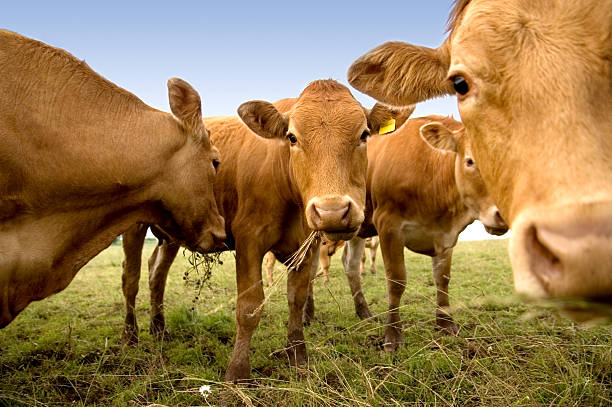
Why Cost per Kg Gain Matters More Than Feed Price
Learn why feed cost per kg gain is a more powerful profitability metric than feed price and how it can improve livestock business decisions.
Introduction
One of the most common mistakes in livestock production is evaluating feed based solely on its price.
Farm managers often ask:
“How much does a bag of feed cost?”
A better question is:
“How much does it cost to produce one kilogram of gain?”
The cheapest feed is not always the most profitable feed.
In many cases, a more expensive feed can generate better growth performance, improved feed conversion efficiency, and ultimately higher profits.
This is where the concept of Feed Cost per Kg Gain becomes one of the most important metrics in livestock profitability management.
The Problem with Focusing on Feed Price Alone
Many livestock businesses compare feeds using:
- Cost per bag
- Cost per kilogram of feed
- Cost per ton
While these numbers are important, they only tell part of the story.
Feed does not generate profit simply because it is cheap.
Feed generates profit when it helps animals efficiently convert nutrients into marketable output.
Examples include:
- Weight gain in pigs
- Weight gain in broilers
- Milk production in dairy cows
- Egg production in layers
A cheap feed that produces poor performance may actually cost more in the long run.
Understanding Feed Cost per Kg Gain
Feed Cost per Kg Gain measures the actual feed cost required to produce one kilogram of live weight gain.
Formula
Feed Cost per Kg Gain = Feed Conversion Ratio × Feed Cost per Kg Feed
This KPI combines two critical factors:
Feed Price
How much feed costs.
Feed Conversion Ratio (FCR)
How efficiently animals convert feed into growth.
By combining both factors, Feed Cost per Kg Gain provides a more accurate picture of profitability.
Example 1: Cheap Feed vs Premium Feed
Feed A
Feed Price:
KES 50/kg
FCR:
3.0
Feed Cost per Kg Gain:
KES 50 × 3.0 = KES 150
Feed B
Feed Price:
KES 60/kg
FCR:
2.4
Feed Cost per Kg Gain:
KES 60 × 2.4 = KES 144
Although Feed B is more expensive, it produces cheaper weight gain.
In this example:
Feed B is the more profitable option.
Why Feed Conversion Ratio Matters
Feed Conversion Ratio is one of the strongest drivers of livestock profitability.
Formula
FCR = Feed Intake ÷ Weight Gain
Lower FCR means:
- Less feed required
- Lower production costs
- Better margins
Higher FCR means:
- More feed required
- Higher production costs
- Lower profitability
Because feed often represents 60–80% of production costs, even small changes in FCR can have major financial consequences.
Financial Impact of Small FCR Changes
Consider a pig farm producing 5,000 market pigs annually.
Current FCR:
2.8
Target FCR:
2.6
Difference:
0.2
Feed Cost:
KES 55/kg
Market Weight Gain:
100 kg
Additional Feed Cost per Pig:
0.2 × 100 × 55
= KES 1,100
Farm-Level Impact:
KES 1,100 × 5,000 pigs
= KES 5,500,000
A seemingly small change in FCR can cost millions of shillings annually.
Why Nutrition Economics Matters
Nutrition economics focuses on the relationship between:
- Feed costs
- Animal performance
- Business profitability
Rather than asking:
“What is the cheapest feed?”
Nutrition economics asks:
“What feeding strategy generates the highest return?”
This shift in thinking is critical for commercial livestock operations.
Feed Margin Analysis
Feed Margin evaluates whether additional feed costs generate additional revenue.
Questions include:
- Does a premium feed improve growth?
- Does improved growth justify the higher cost?
- Does the additional performance increase profit?
The objective is not to minimize feed cost.
The objective is to maximize margin.
Income Over Feed Cost (IOFC)
Income Over Feed Cost is one of the most powerful profitability metrics.
Formula
IOFC = Revenue – Feed Cost
A feeding program should always be evaluated based on its effect on IOFC.
Higher IOFC indicates:
- Better profitability
- Better feed efficiency
- Better economic performance
Common Mistakes Farms Make
Choosing Feed Based on Price Alone
Cheap feed can produce poor growth performance and lower profitability.
Ignoring Feed Conversion
Feed efficiency often matters more than feed cost.
Failing to Measure Feed Cost per Kg Gain
Without this KPI, profitability opportunities remain hidden.
Not Conducting Feed Trials
Different diets should be evaluated using performance and economic outcomes.
Management Recommendations
To improve profitability:
1. Track Feed Cost per Kg Gain Weekly
Monitor both feed price and FCR.
2. Benchmark Feed Efficiency
Compare performance against:
- Historical farm performance
- Industry averages
- Top-performing farms
3. Conduct Nutrition Economics Reviews
Evaluate:
- Feed Margin
- IOFC
- Return on Feed Investment
4. Focus on Profit, Not Feed Price
The goal is profitability, not the lowest feed bill.
Key Takeaways
Feed price alone is a poor indicator of profitability.
The most profitable feed is not necessarily the cheapest feed.
By monitoring Feed Cost per Kg Gain, FCR, Feed Margin, and Income Over Feed Cost, livestock businesses can make better nutrition decisions and significantly improve profitability.
Successful livestock enterprises understand a simple principle:
The objective is not to buy the cheapest feed.
The objective is to produce the cheapest kilogram of gain while maximizing profit.
Ready to Improve Feed Economics?
Caleb Ethan Livestock Intelligence helps livestock farms, feed companies, and agribusinesses improve profitability through feed cost analysis, nutrition economics reviews, KPI analytics, farm performance audits, and executive reporting systems.
Turn livestock data into profit through better decisions and measurable business results.